Beyond the Game: How Sport Is Changing Young Lives in Uganda’s Refugee Settlements
For generations, sports have primarily been seen as a form of recreation a way to unwind after school, stay fit, or simply engage in competition and fun. Few considered that a football match, a relay race, or a simple playground game could serve as a powerful tool to address one of today’s most pressing challenges: mental health.
This skepticism was familiar to Lydia Murungi when Game Connect launched in Uganda in 2020. As the Consortium Manager of the initiative, she recalls a time when many struggled to believe that structured play could help young people overcome trauma, build resilience, or develop the confidence to handle life’s challenges.
“Everybody thought using sport was for recreation,” she recalls. “It wasn’t believed to improve young people’s psychosocial well-being or mental health.”
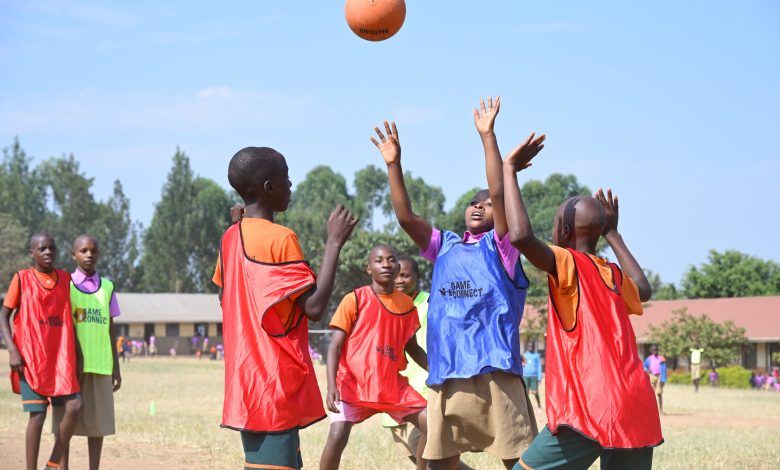
However, six years later, that assumption is slowly being challenged. Across refugee settlements and host communities, football pitches, netball courts, and dusty playgrounds have transformed into unexpected classrooms where young people learn to manage stress, rebuild confidence, resolve conflicts, and rediscover a sense of belonging.
Teachers speak of children returning to school and participating more confidently in class, while coaches describe previously withdrawn youth emerging as leaders.
Refugee youth who once struggled to find their place are now pursuing businesses, mentoring their peers, and, in two remarkable cases, preparing to compete at the Youth Olympic Games in Dakar, Senegal.
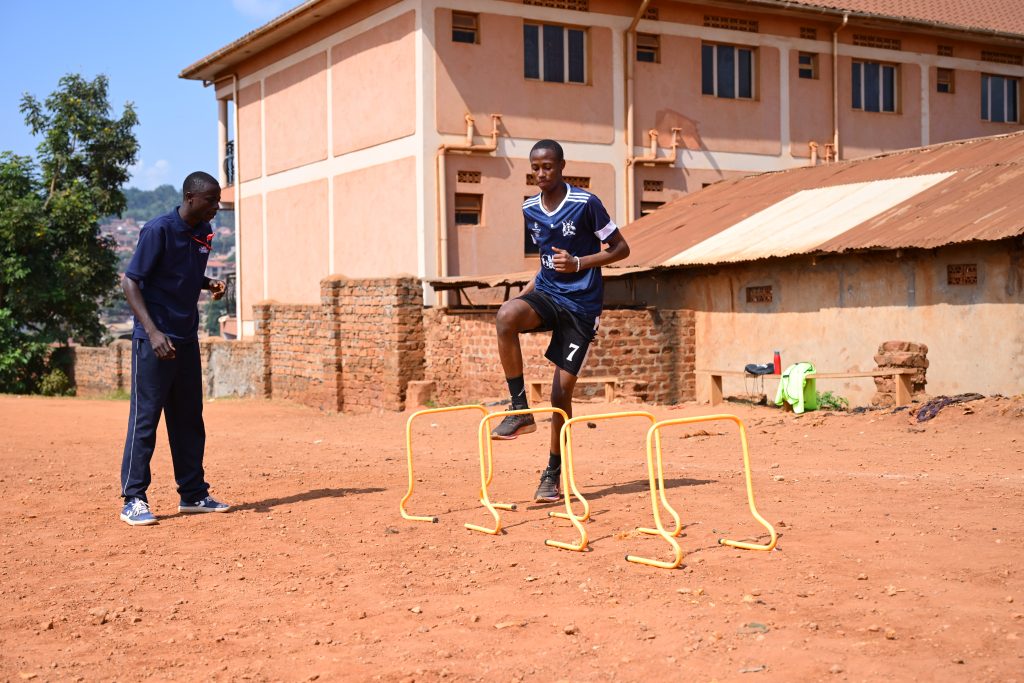
Collectively, these stories indicate that when sport is intentionally combined with mentorship and life skills, it becomes much more than just a game; it can serve as a pathway to healing, opportunity, and hope.
For Murungi, the key question was never whether sport can produce better athletes, but whether it can help build healthier and more resilient young people. This question has gained greater significance as Uganda grapples with increasing mental health challenges among its youth.
What began as a bold experiment has now evolved into one of Uganda’s most extensive sport-for-development initiatives. From August 2020 to March 2026, Game Connect reached 28,812 young people across refugee settlements and host communities in Kamwenge, Kikuube, Adjumani, Kampala, and Lamwo. More than half of the participants were refugees, while the rest came from host communities.
Dr Hafsa Lukwata, Head of Mental Health and Control of Substance Use at the Ministry of Health, emphasises that many young people today are growing up without the life skills necessary to cope with trauma, stress, and other social pressures.
Initiatives like Game Connect use sport as a platform to teach resilience, emotional regulation, and healthy relationships. The program was designed to reach young people wherever they were. While 56 per cent of participants were enrolled in school, 44 per cent were out of school.
Murungi explains that the program intentionally focuses on sports because it naturally brings young people together. “Sport is fun. Children and young people are all about fun. They are attracted to exciting activities,” she says. “Sport was an easy way to mobilise young people, getting them together to learn, play, and connect through something they enjoy.”
However, once they arrive on the playground, the lessons extend far beyond the game itself. Through structured activities, discussions, and mentorship, participants are introduced to essential life skills such as self-awareness, accountability, conflict management, and a sense of belonging. These skills are designed to help them navigate challenges they face outside of the field.
Learning Through Play
At Yoro Primary School in Adjumani District, pupils learn life skills through various games, one of which is called “Blow the Balloon.” In this activity, dozens of students form a circle, each holding a deflated balloon before they are instructed to inflate them.
Their coach, Muraa Agnes Eiyo, encourages them to keep blowing air into the balloons. While some pupils stop almost immediately, fearing that the balloons might burst, others continue until their balloons are tightly stretched in their hands.
Only after the exercise did she explain its significance. The balloon, she told them, represented the emotional pressure many young people carry daily. Just as a balloon can only hold so much air before it bursts, people who bottle up anger, fear, grief, and anxiety without healthy ways to express themselves will eventually reach a breaking point. The lesson emphasised recognising these emotions, discussing them, and finding healthy coping strategies.
The balloon exercise is just one of many structured activities utilised during the program. Other activities challenge participants to use their weaker hand or foot, solve problems as a team, or navigate obstacles together. Each game ends with reflection, allowing young people to connect their experiences on the playground with challenges they encounter in everyday life.
Not every young person leaves Game Connect with the same story. “Every young person embarks on their individual journey. They define their own success,” Murungi states. “There are thousands of these journeys, each unique, but every young person stands out in their own way.”
For 13-year-old Judith Ainembabazi from Rwamwanja Refugee Settlement in Kamwenge District, her journey began with a struggle to find confidence. Before joining Game Connect, Ainembabazi found it challenging to make friends. She watched as her classmates drifted away, leaving her withdrawn and questioning herself.
Months later, the same girl who once struggled with her sense of belonging was standing before government officials in Kampala, delivering a speech on school dropout rates during the Game Connect Summit, and later reciting a poem on mental health at the launch of the National Mental Health Guidelines and Tools for Educational Institutions in Uganda.
“I had never been to Kampala, but I went there twice because of Game Connect. This experience helped me develop confidence,” she shares.
Judith’s story is just one among many. While some participants gain the confidence to speak publicly, others find a more fundamental sense of belonging.
Across refugee settlements and host communities, the program has become a space where young people from diverse backgrounds learn, play, and grow together, breaking down barriers related to disability, displacement, and social isolation.
For 21-year-old Phoibe Byiringiro, a refugee living with a disability in Rwamwanja Refugee Settlement, this sense of belonging has been transformative. Before joining Game Connect, Byiringiro rarely interacted with others and often kept to herself, unsure whether she would be accepted. Today, she actively participates in sports and community activities, playing alongside teammates who recognise her abilities rather than her disability.
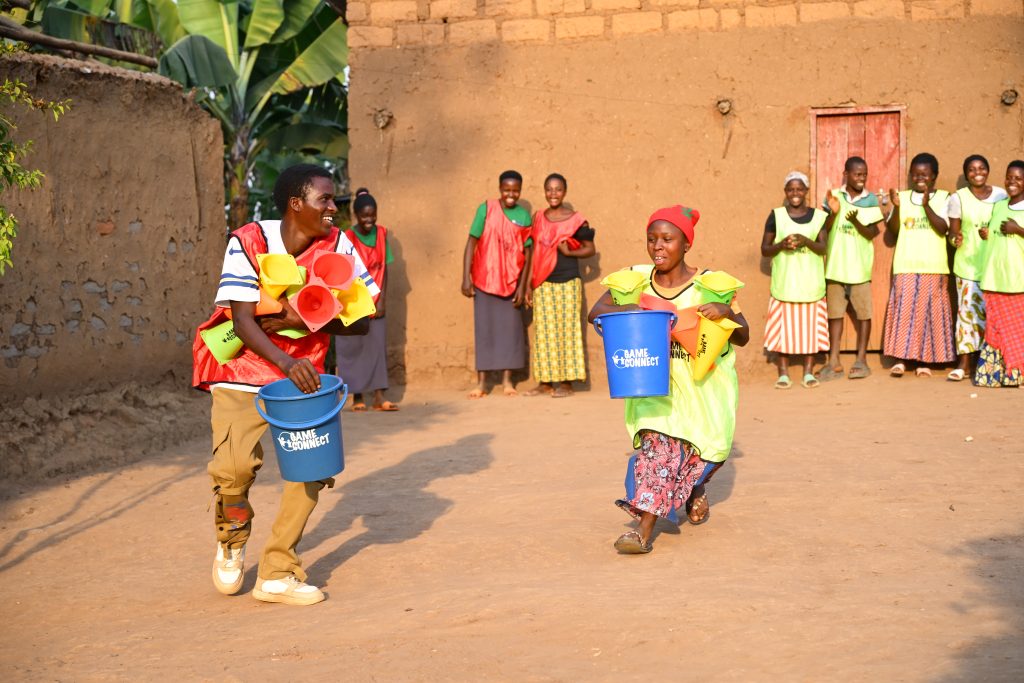
Phoibe’s experience reflects a broader commitment to inclusion. Throughout its implementation, Game Connect has engaged over 700 young people with disabilities, ensuring that structured sports activities create opportunities for participation, regardless of physical ability.
For many, the lessons learned on the playground extend beyond just confidence and a sense of belonging. They significantly influence how young people make decisions, manage money, and prepare for their future.
For Dorika Kafirimbi, these lessons opened the door to financial independence. Introduced to a Village Savings and Loan Association through Game Connect, she learned how to save, access small loans, and start a business. Today, she chairs her savings group and runs a small stall outside her home. “I now have a business that I started from my savings,” she says, crediting the program with not only improving her livelihood but also helping her build friendships and a stronger support network.
While the impact of the program is most visible in the lives of individual participants, teachers report that it is also changing the environments in which young people learn. In schools where Game Connect has been implemented, educators describe improvements in students’ confidence, participation, and relationships with one another.
The program has maintained nearly equal participation between girls and boys, reaching 14,962 girls and 13,850 boys. At Munyuma Primary School in Kamwenge District, Headteacher Titus Agira notes that structured play has attracted and retained more learners, resulting in increased enrollment and a decline in dropout rates, particularly among girls. Beyond attendance, he states that the program has helped teachers identify and nurture sporting talent while creating a more engaging school environment where children look forward to learning.
A similar story is unfolding hundreds of kilometres away at Yoro Primary School in Adjumani District. Headteacher Iraku Molson Atanasious reports that the program has broken down barriers that once kept boys and girls apart during play.
Instead, it has fostered teamwork, empathy, and mutual support among students. As a result, attendance has improved, absenteeism has decreased, and learners have become more willing to share their challenges and support one another. “Game Connect made them feel like one family,” he says.
For some learners, these changes have extended beyond the school gates, opening doors they never imagined possible. Among them are Florence Masumbi and Rashid Rochene, two young Congolese refugees whose experiences through Game Connect have earned them spots on the Refugee Olympic Team for the 2026 Youth Olympic Games in Dakar, Senegal.
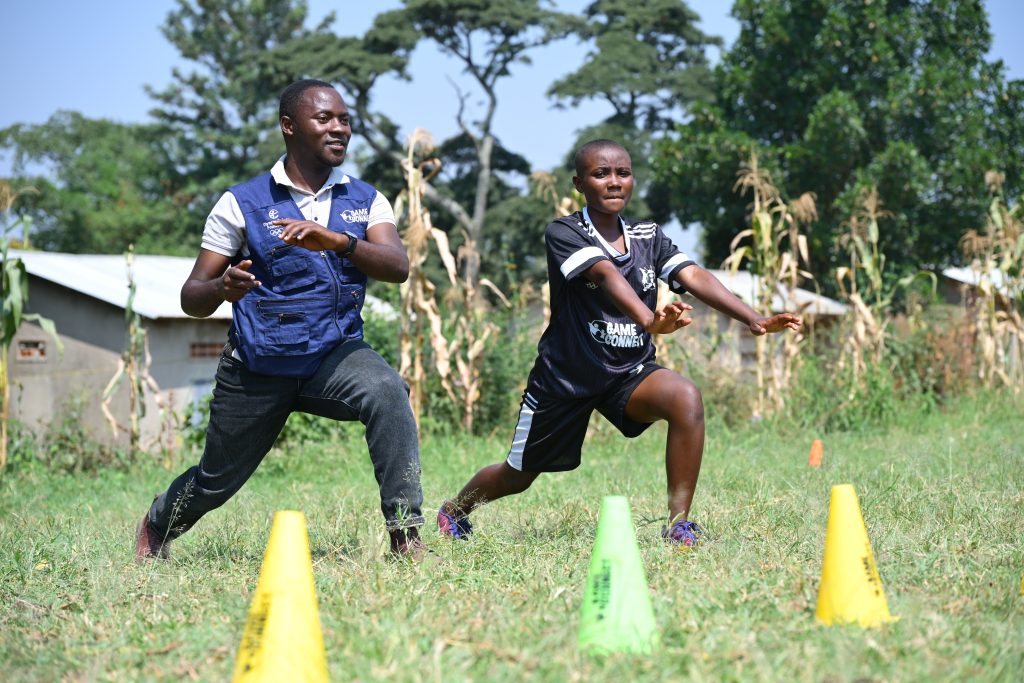
Although they grew up in different parts of Uganda and under different circumstances, both discovered more than just their athletic talent through the program. Florence, who grew up in Rwamwanja Refugee Settlement, found a sense of belonging alongside her sports abilities. Rashid, who arrived in Kampala as a shy refugee, says the program helped him make friends, believe in himself, and pursue a dream he had never considered possible.
Brandon Katura, the Project Coordinator for Game Connect at the Uganda Olympic Committee, states that their selection represents much more than athletic success. It demonstrates what can happen when talented young people are given the opportunity. “You cannot deny merit,” he says. “When someone has the ability and puts in the work, they will go the distance.”
Six years ago, many viewed sports as little more than recreation, a chance for young people to play and compete. Today, across Uganda’s refugee settlements and host communities, that perception is steadily changing.
Through Game Connect, playgrounds have become spaces where confidence is nurtured, friendships are formed, life skills are developed, and opportunities are created.